Step 4 - Suburb Selection
Data Metric
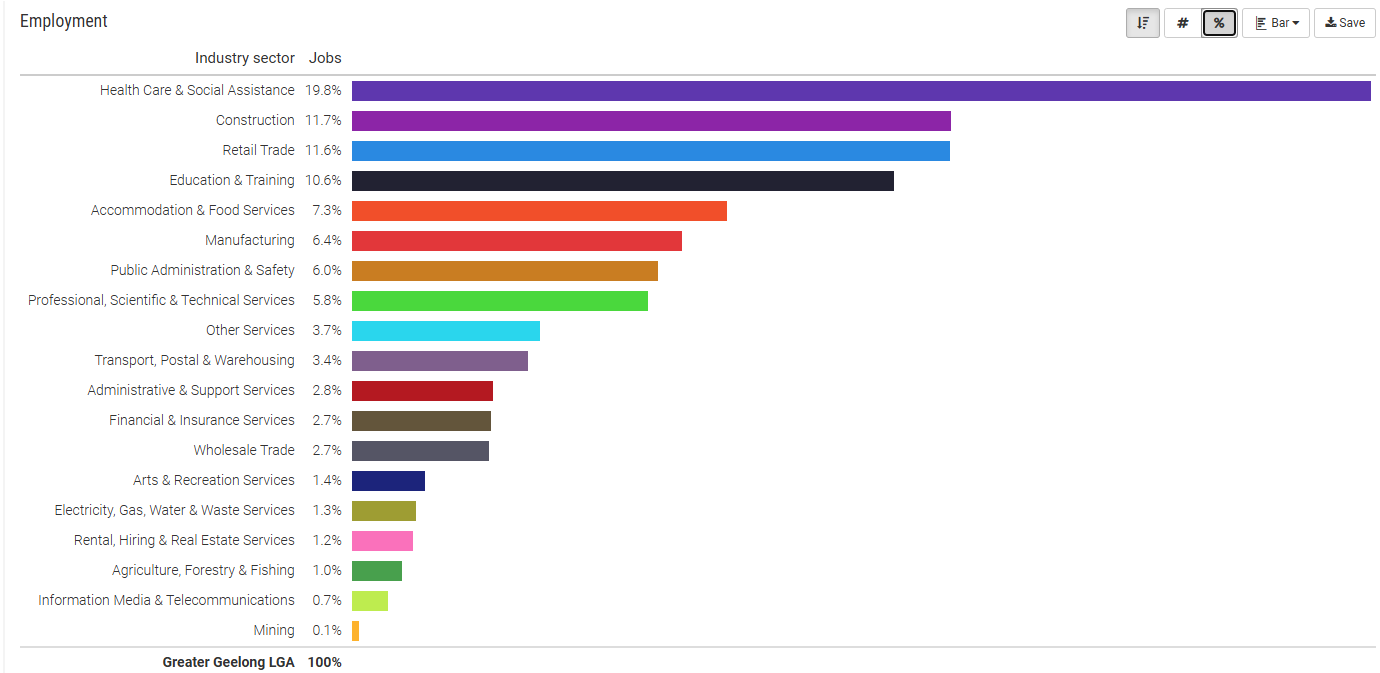
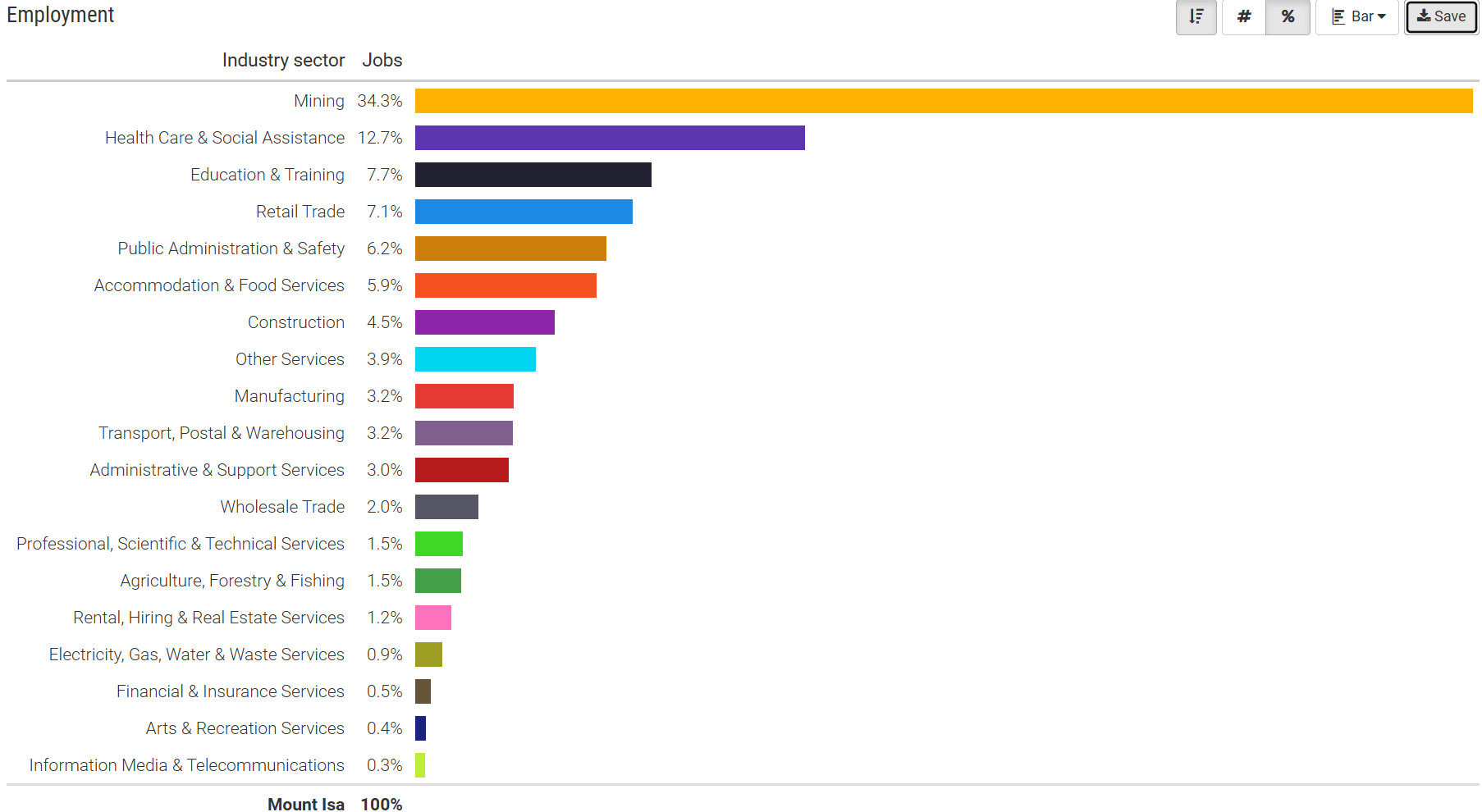
Employment Diversification
Refers to areas which have multiple job-creating sectors beyond a single dominant industry (like mining or agriculture) to build a resilient economy.
Regional Export Diversification
Refers to areas where its range of exported goods/services is sufficient enough to reduce reliance on a few products or markets, thereby building economic resilience.
Gross Regional Product (GRP)
Gross Regional Product (GRP) is an economic measure showing the value of all final goods and services produced within a specific region over a period, essentially a regional version of Gross Domestic Product for a smaller area, indicating local economic size and health by tracking industry output, employment, and growth.
Unemployment Rate
The unemployment rate is the percentage of the labour force (employed plus unemployed people) who are actively looking for work but don't have a job, indicating economic health by showing how well an economy creates jobs for those wanting to work.
Source
Free: Remplan
Free: Remplan
Free: Remplan, .idcommunity
Free: .idcommunity
Target Range
No single industry, especially mining, making up more than around 30%-35%+ of the employment industry.
Noting that this isn't a strict threshold, we aren't economists - we are just trying to rule-out one industry or mining dominated towns.
For example, Townsville has 37% of employment through public administration and safety. This is considered a safer industry and therefore wouldn't necessarily be considered an undiversified economy.
Additionally, the employment in an economy like Kalgoorie is 27% mining based, with the next closest being health-care at 8%, even though this is under 30% this is still clearly an undiversified economy and a high-risk investment opportunity.
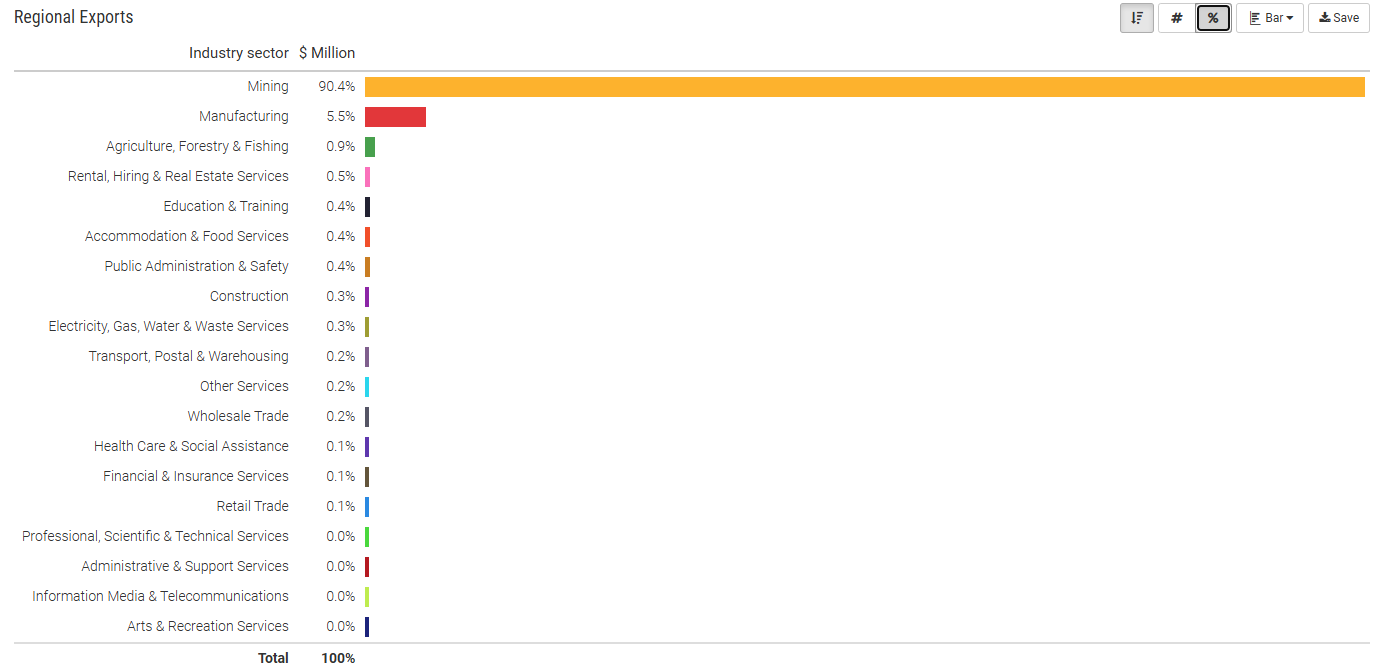
No single industry, especially mining, making up more than around 30-35%+ of the regional exports.
Noting that this isn't a strict threshold, we aren't economists - we are just trying to rule-out one industry or mining dominated towns.
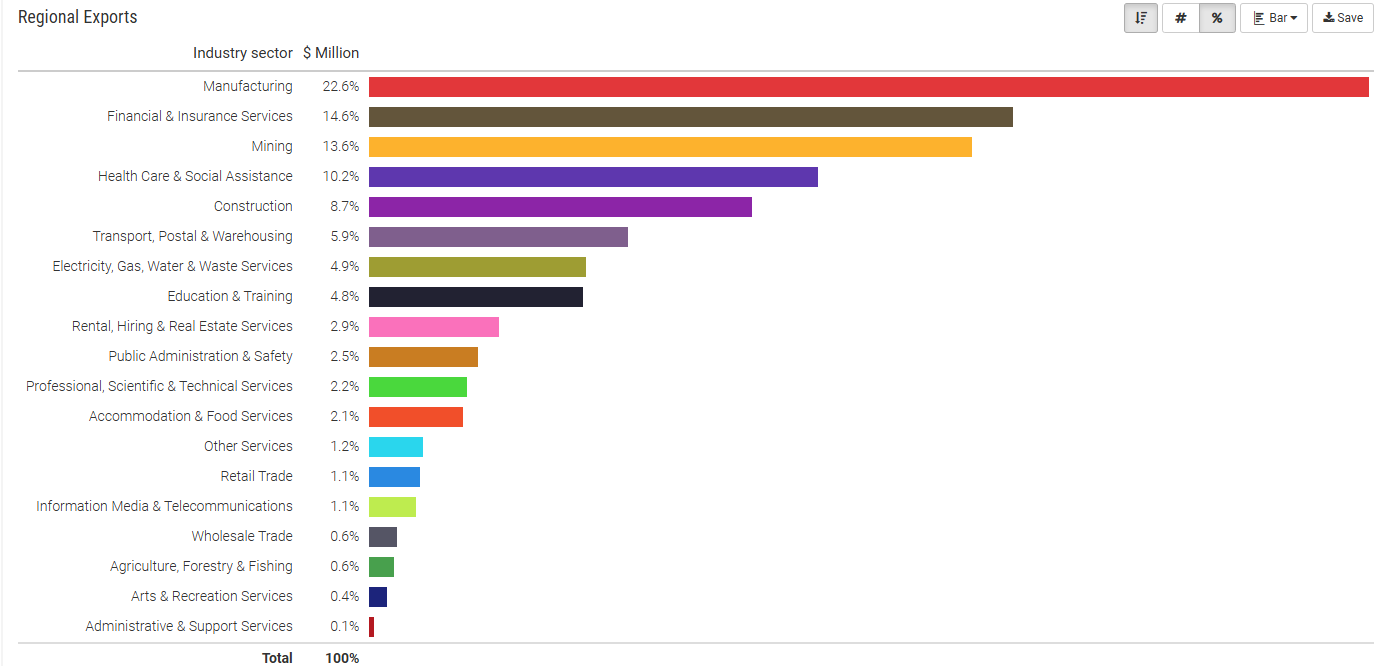
For example, if you look at Newcastle you will see that 13.6% of the regional exports is from the mining industry; however, given that 22.6% is from manufacturing, 14.6% from financial services and 10.2% from health care this would easily be considered a diversified economy.
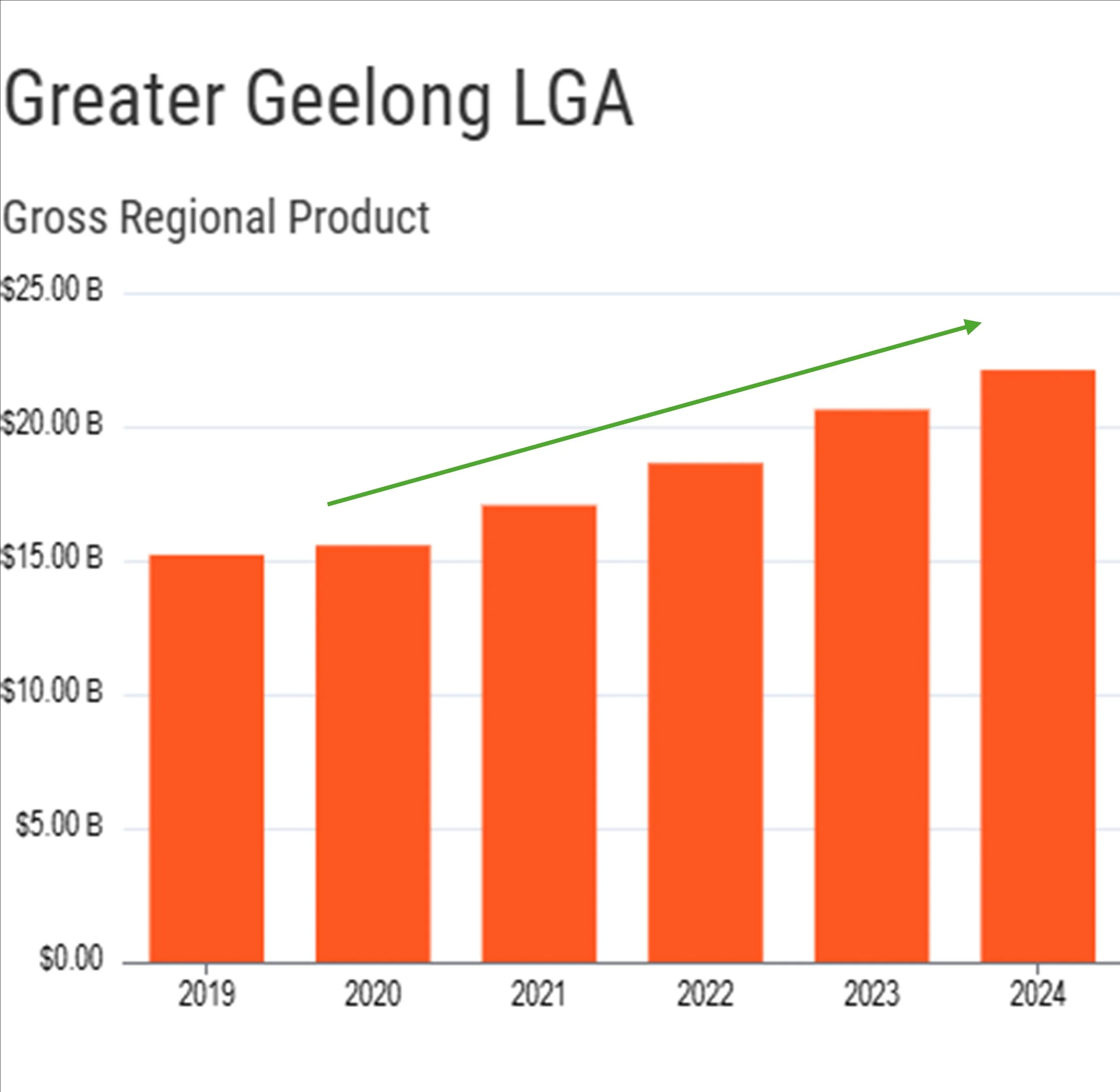
No specific target GRP number, I am not an economist and won't pretend to be one, but you do want to make sure the GRP is trending upwards in recent years and is not consistently declining.
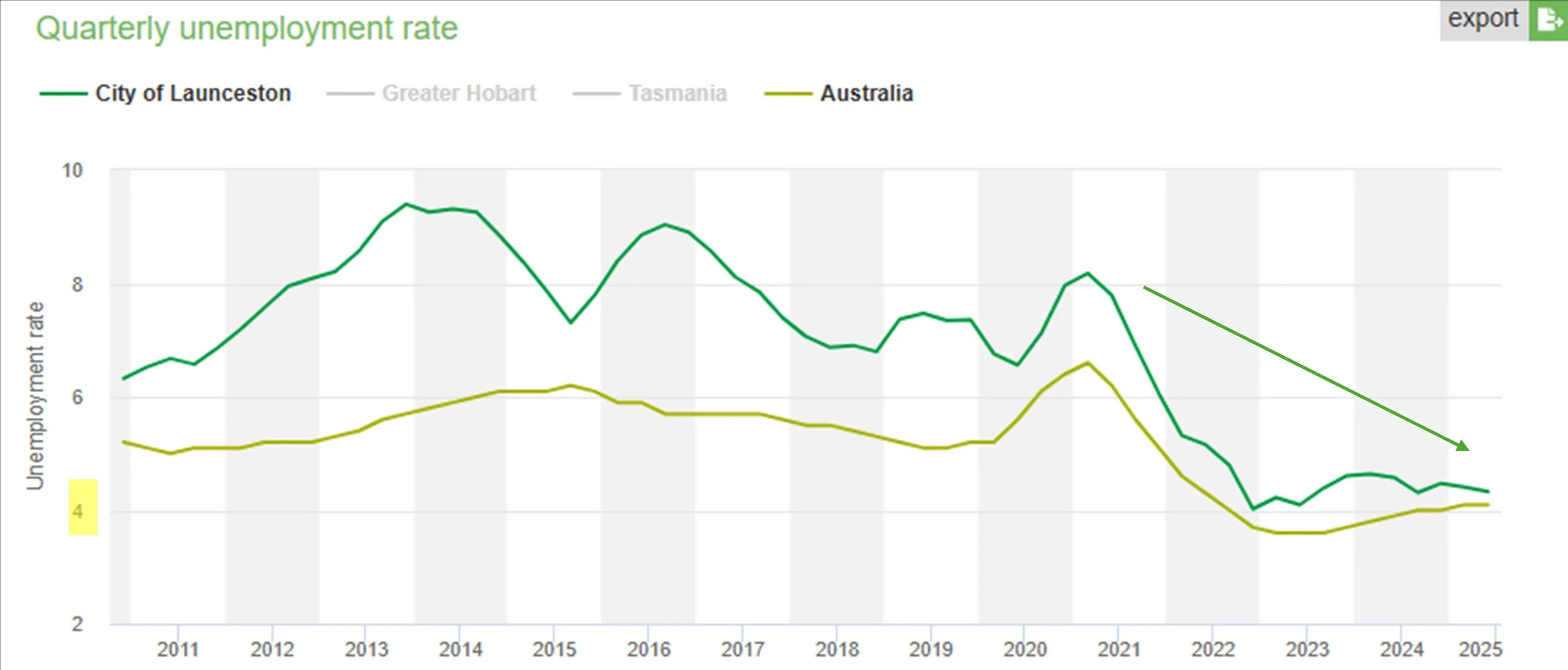
Generally speaking, a healthy economy is where the unemployment rate is below 5%.
However, we also need to contextualize this with what the current Australian average is at the time and what the long-term average of the area is (which id.community will tell you - see the graph I have included in the right-hand column).
Again, I am not an economist… but we just want to make sure that if the area we are looking to invest in has an unemployment rate that is well above the Australian average and is trending upwards we may want to do some extra due diligence.
Trend Analysis and Guidance
No trend analysis required here.
Example of employment diviersification in an economy: Geelong, VIC
Example of undiversified employment opportunities in an economy: Mount Isa, QLD
No trend analysis required here.
Example of a diversified economy: Newcastle, NSW
Example of an undiversified economy: Mount Isa, QLD
Regions with diversified economies generally experience more stable long-term growth and are less exposed to the housing price volatility often seen in single-industry areas, where downturns in the dominant sector, such as the closure of a major mine in a mining-reliant area, can significantly affect property prices.
See the below example from Geelong which depicts a good example of what we like to see.
Ideally, we want to see the unemployment either trending down or being consistently low.
Please see the below example from Launceston which shows some strong trends.
Flexibility
Low
If the industry which makes up more than 35% is something safe such as public administration or health care, then that is generally fine.
If you are more of a risky investor and happy to move-in and out of markets, you may be happy with mining being more of a dominate industry - but I personally don't recommend it.
Some towns which are very close / right next to major diversified economies might not pass the threshold, but could be considered safe still given their proximity to a major economy.
Low-Medium
You could bit a more flexible on this one than employment diversification, but it is up to you.
If the industry which makes up more than 35% is something safe such as public administration or health care, then that is generally fine.
If you are more of a risky investor and happy to move-in and out of markets, you may be happy with mining being more of a dominate industry - but I personally don't recommend it.
Some towns which are very close / right next to major diversified economies might not pass the threshold, but could be considered safe still given their proximity to major economies.
Medium
Rationale
Areas with diversified economies tend to have more stable long-term growth and are less likely to experience the housing price volatility seen in single-industry areas, where downturns in the dominant sector, such as the closure of a major mine in a mining-dependent region, can significantly impact property prices.
Areas with rising economic output often see greater job creation, higher wages, and increased infrastructure investment. These factors can create a positive ripple effect, supporting stronger and more sustained growth in property prices.
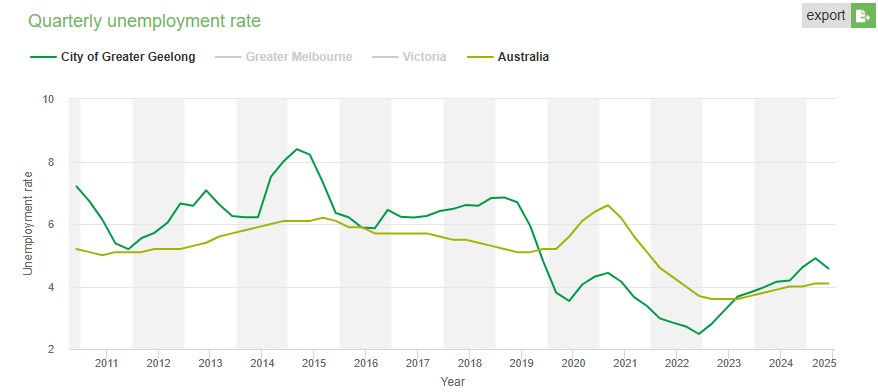
Trends like the below in Geelong are also ok given that unemployment rate is still low and on-par with the Australian average.
Medium
Just because the unemployment is trending upwards slightly, or is above the Australian average doesn't mean you don't invest in those areas. The unemployment rate is just one factor of an economy.
You need to consider the unemployment rate in context of all your other analysis. If everything else is really strong, but the unemployment rate is not ideal then it may be something you compromise on, especially if the economy is diversified.
Low unemployment rates typically signal a strong local economy, which can create a ripple effect that supports steady demand for housing.
Infrastructure Spend / Projects
Infrastructure spend and projects refer to government or private investment in building, upgrading, and maintaining essential physical systems that support a society or economy, creating jobs, boosting growth, and improving services.
Paid: HtAG
Free: ANZIP
If you are using services like HtAG you can track infrastructure on a per person basis. If so, anything above $200 is considered good.
However, this is not strictly necessary as looking at $ values like this, whether it be on a per person or per project basis, can ignore some of the key factors about infrastructure projects - specifically that you need to focus on projects which:
(1) are actually comitted / funded; and
(2) will create jobs over the long-term.
See the the next column for some more detail on these two points.
No trend analysis required here, but I have outlined some further guidance below.
(1) You need to look at projects which are actually committed / funded in the relevant area.
There are countless examples of politicians announcing projects, especially nearing elections, and then the project disappears off the face of the earth and never happens - think of projects like a new fast train from Sydney to Newcastle, which still hasn’t happened. Sources such as ANZIP will give you actual status of relevant projects.
(2) You need to focus on infrastructure projects that create jobs over the long-term.
For example, a road upgrade or data centre can be great for creating jobs over a short period of time, but it doesn't take many people to actually maintain that in the future. Whereas hospitals and schools, which are considered some of the best for capital growth, create jobs during the project development and afterwards as people are needed to actual run the service.
For reference, hospitals in particular are considered one of the best projects for capital growth as they often bring hundreds / thousands of stable and high-paying jobs.
High
Infrastructure projects in isolation do not lead to capital growth and they can often be unreliable - particularly due to drawn out timelines on completion of projects.
If an area has strong supply demand factors it will grow regardless of infrastructure spend.
So this should be used as an extra factor to keep an eye on but it should not weigh too heavily in your decision making process.
Major infrastructure projects improve liveability, accessibility, and drive economic activity, making suburbs more appealing to both residents and investors.